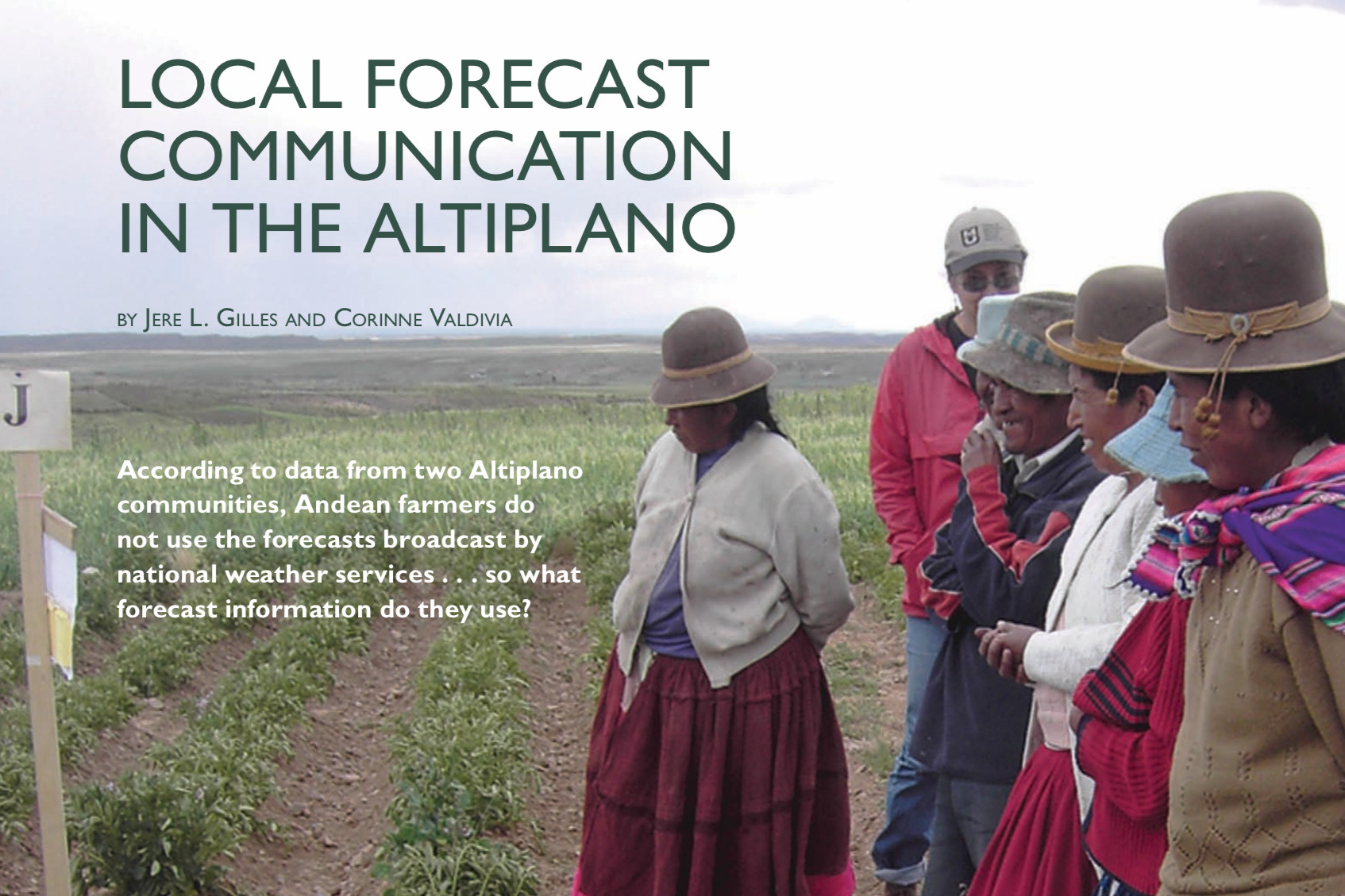
Local Forecast Communication in the altiplano
Langues disponibles :
Langues disponibles :
Daté : juillet 2019
Auteurs : Corinne Valdivia , Jere L. Gilles
A paper, produced by the American Meteorological Society, which discusses the case of two communities of Andean farmers that reject weather forecasts broadcasted by the national weather service in favour of local experts using traditional forecasting methods.
Excerpt:
Agricultural production systems are extremely sensitive to climate variability. This is especially true for small farmer production systems in developing countries where there are few resources to cushion the impacts of climatic shocks. Seasonal and monthly forecasts hold the promise of reducing the impacts of these shocks by allowing farmers to take actions that will either minimize the impacts of adverse weather conditions or take advantage of good growing conditions. To do this requires that small farmers receive forecasts in the form and time needed to help them make decisions. In the last 10 years, there has been a growing realization that farmers have not used forecasts to the degree that the forecast community had hoped. As a result, considerable effort has been devoted to understanding why this has not taken place. This paper describes the networks used to transmit forecast information in the Altiplano of Bolivia and Peru with special reference to three indigenous communities. The implications of these findings for improved forecast utilization are then discussed.
Note: This resource was added to this database as part of a migration of resources from the now defunct CCRP Sphaera platform, and is still awaiting a comprehensive review and quality check.
Les éléments individuels de la collection sont listés ci-dessous. Cliquez sur l’un d’eux pour télécharger le fichier ou accéder à l’URL externe. Vous pouvez télécharger l’ensemble complet ci-dessous sous forme de fichier .zip.
https://journals.ametsoc.org/doi/pdf/10.1175/2008BAMS2183.1
https://journals.ametsoc.org/doi/pdf/10.1175/2008BAMS2183.1
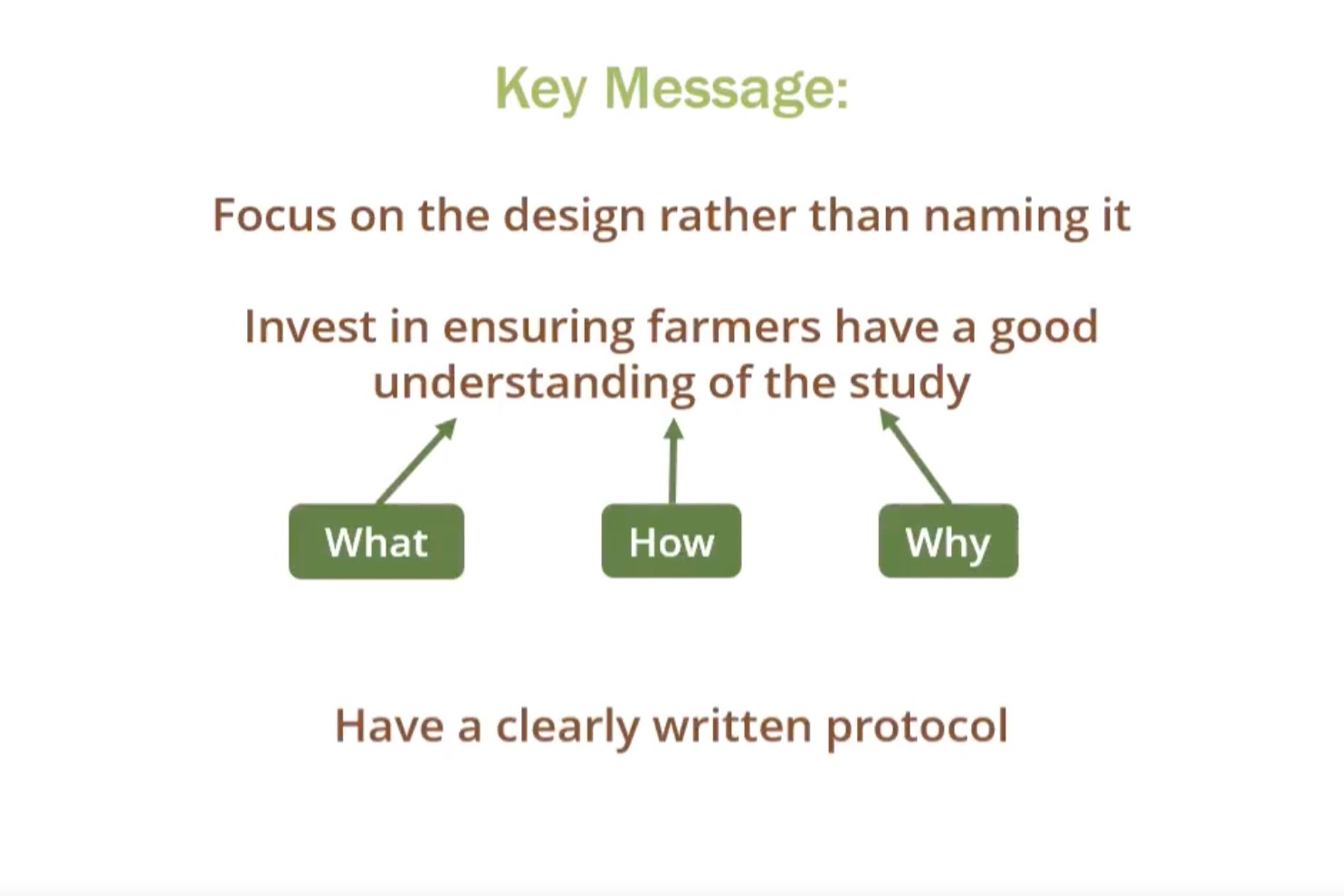
Vidéo
Experiments with Farmers V - "Communicating the design"
Communication is vital when conducting experiments with farmers. This video discusses some of the issues of ho...
Étude de cas
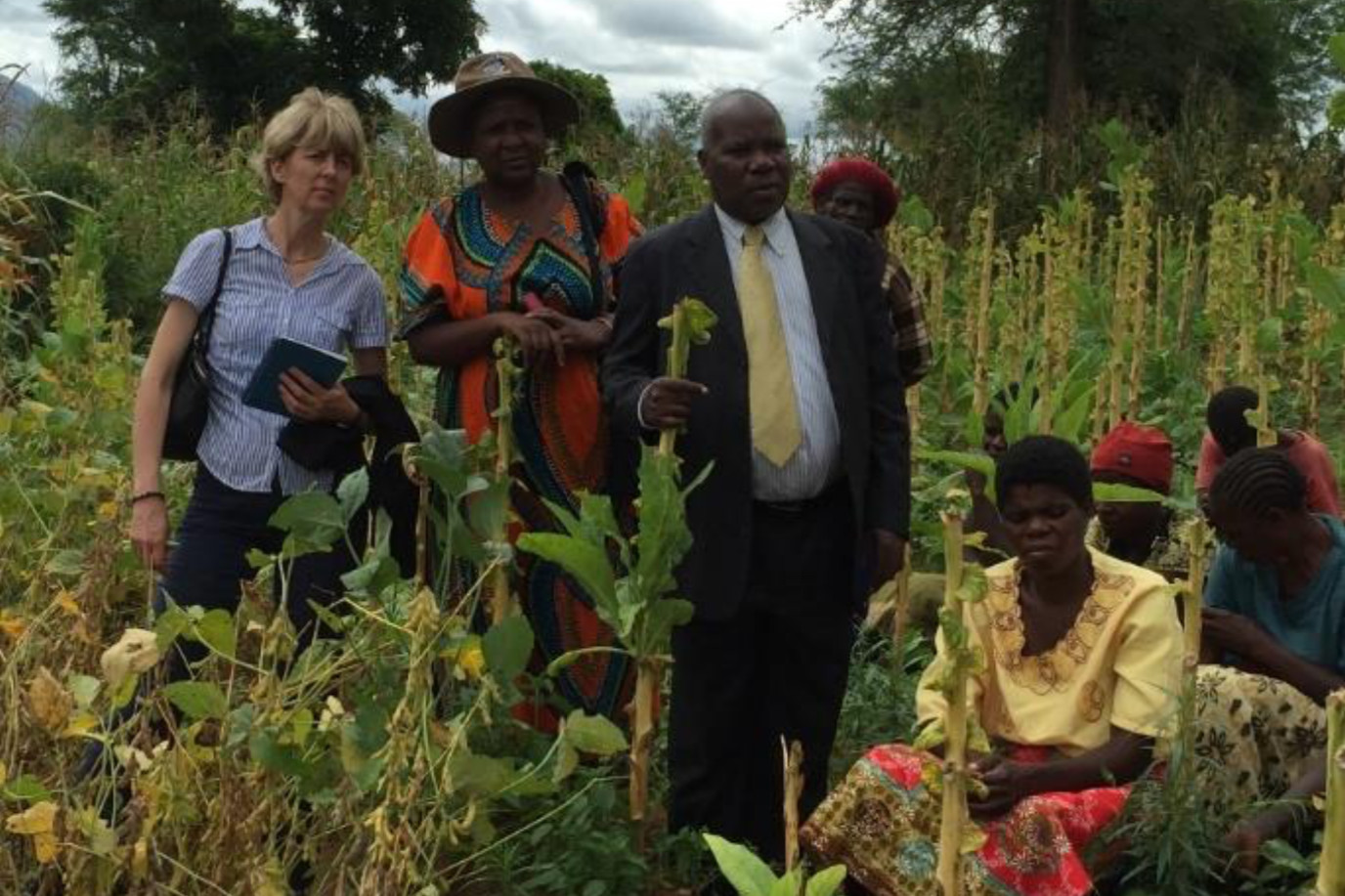
Maize-legume rotations improve soil health and crop productivity
A summary of findings from the "Best Bets" research project undertaken in Malawi.Excerpt:To...
Étude de cas
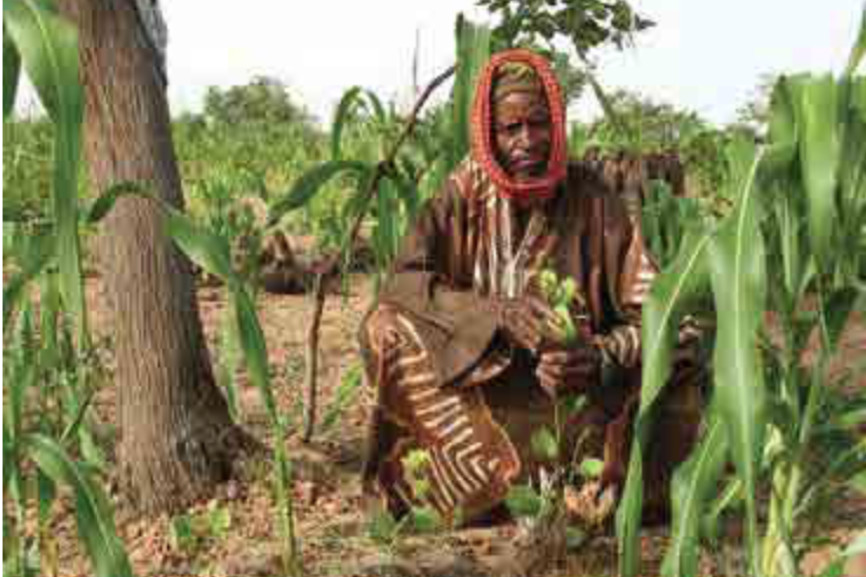
Farmer Managed Natural Regeneration
A report on the impact of a reforestation project conducted in Sub-Saharan Africa. Using an approach of 'farme...
Guide
Enclosures to protect and conserve for better livelihood of the West Pokot community
Field guide developed by the Regional Land Management Unit (RELMA), a part of the Swedish In...
Étude de cas
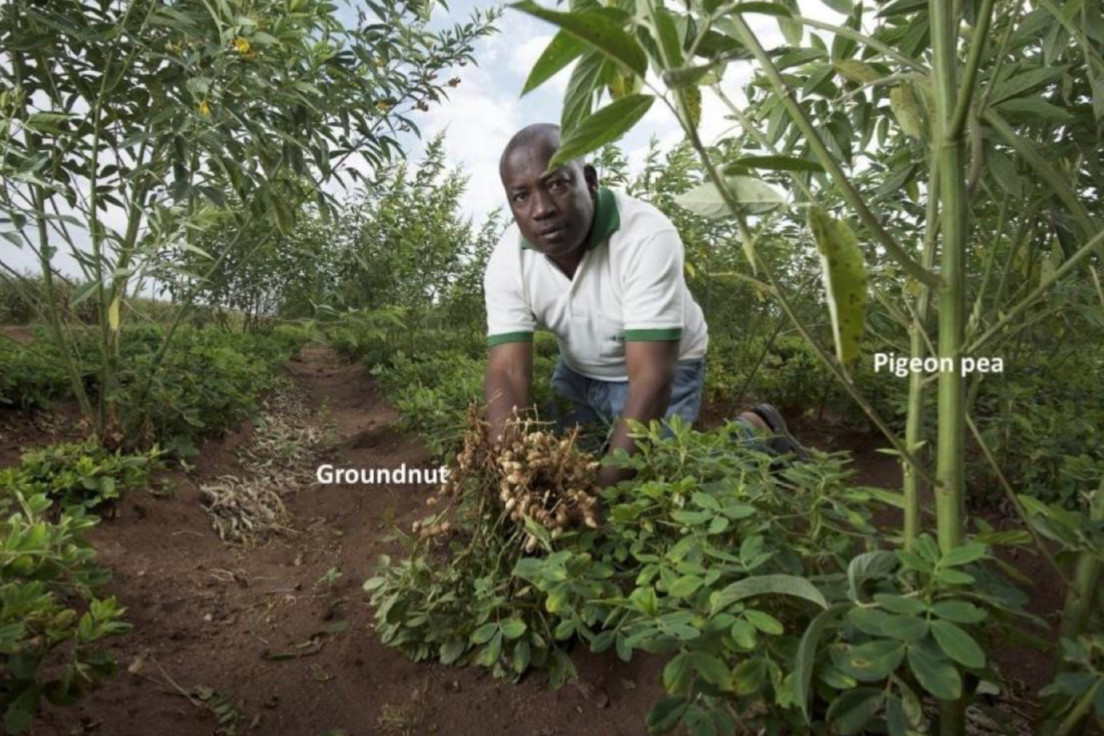
Integrating diverse grain legumes for increased land productivity on small farms in Malawi
Case study of a trial of 'doubled-up legume technology' conducted with smallholder farmers in Malawi. Produced...
Poster
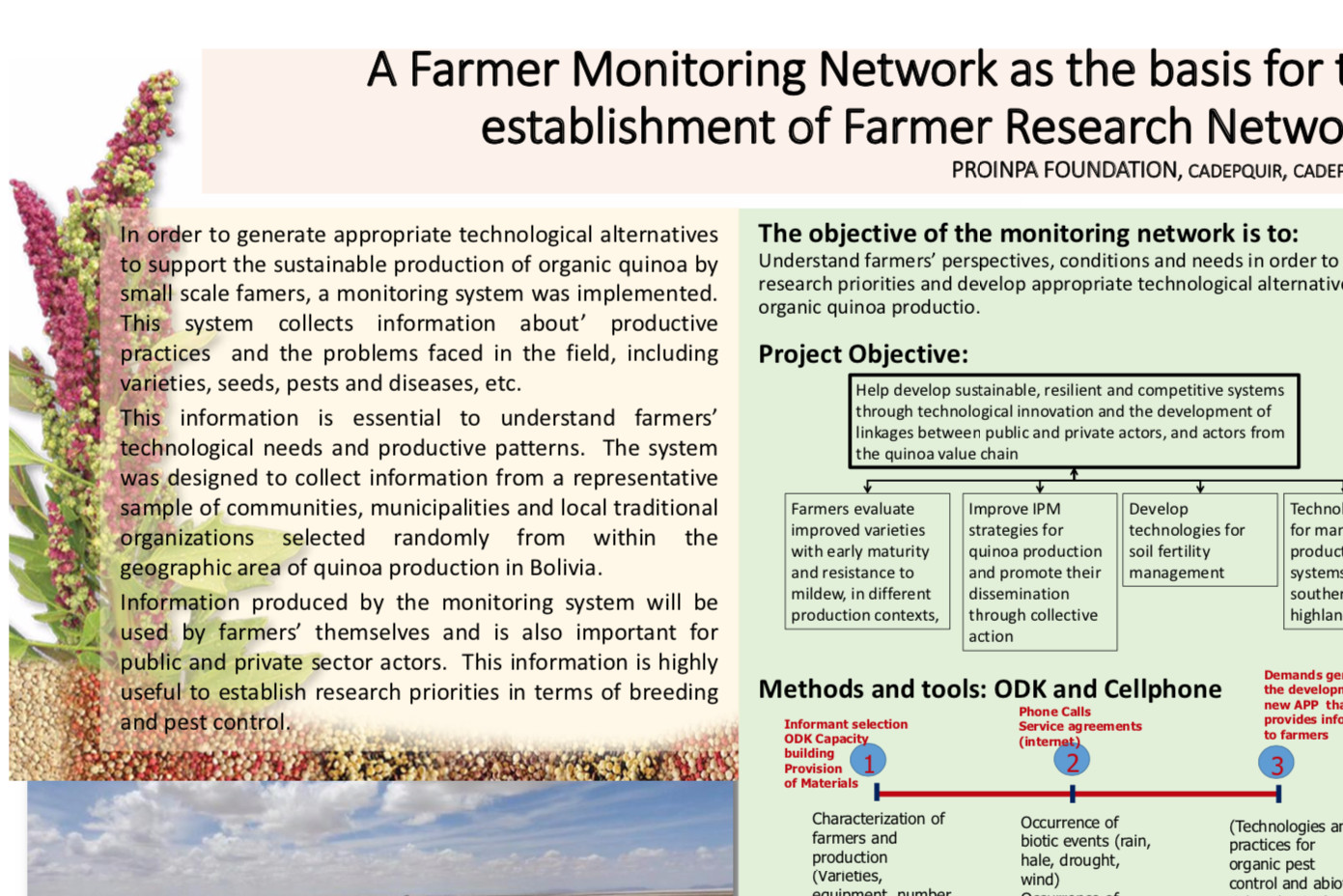
Poster: A Farmer Monitoring Network as the basis for the establishment of Farmer Research Networks
A poster/leaflet giving information about an FRN project implemented with quinoa farmers in Bolivia. Summarise...
Étude de cas
Case Study: Empowering Women in the Oilseeds Business: The Case of Pkwi Women's Cooperative
A case study of a women's farmer cooperative founded in Uganda to provide social and econom...
Article scientifique
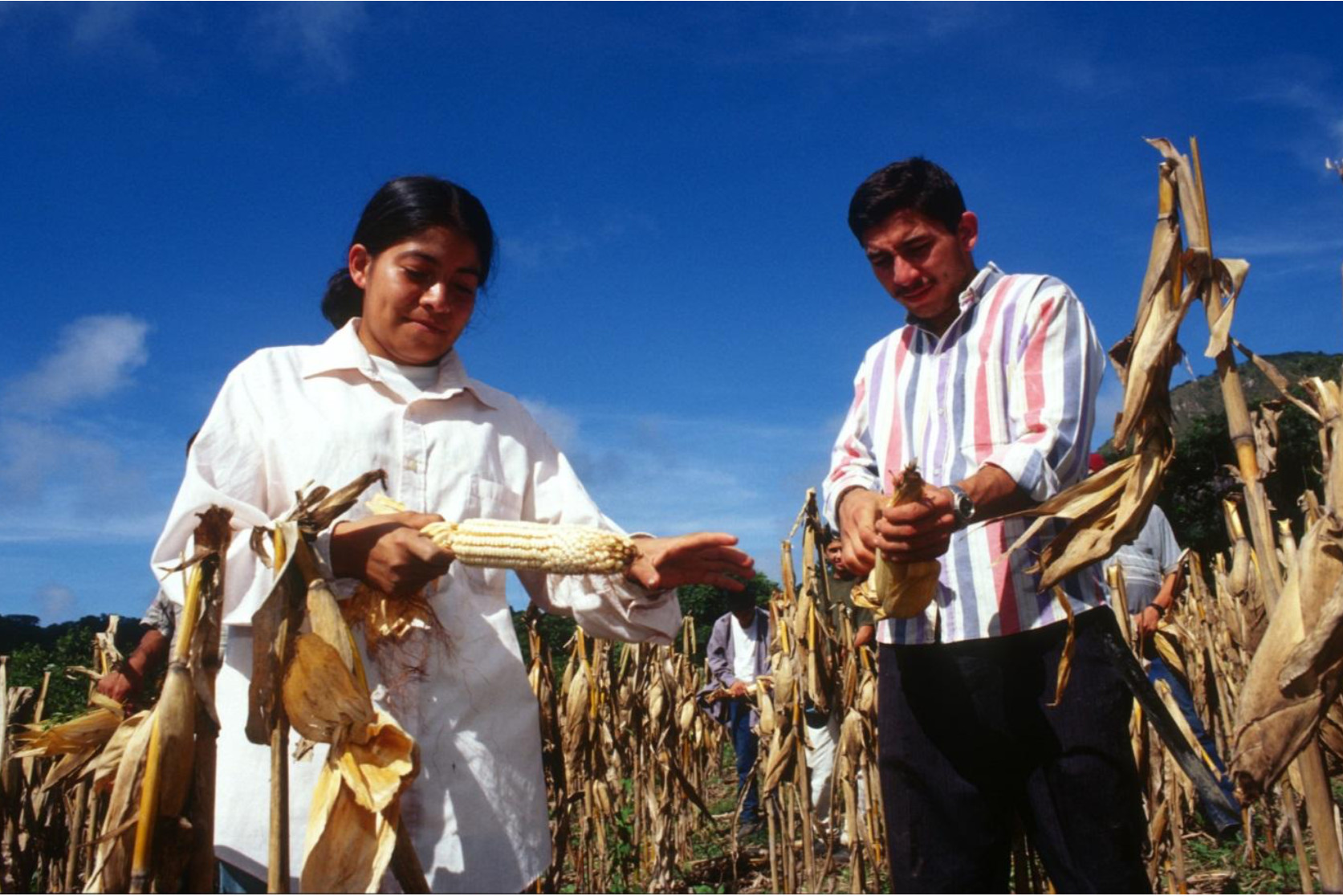
Territorial Development And Local Knowledge Systems: Engaging local farming knowledge through a right-based approach to agricultural development
A paper arguing that the agricultural development efforts should support the practic...
Étude de cas
Protecting Community Rights over Traditional Knowledge: Implications of customary laws and practices - Key findings and recommendations 2005-2009
Key findings report from an action-research project "focused on developing alternative tools to protect tradit...